

This site is intended for US healthcare professionals.

OPZELURA is indicated for the topical short-term and non-continuous chronic treatment of mild to moderate atopic dermatitis in non-immunocompromised adult and pediatric patients 2 years of age and older whose disease is not adequately controlled with topical prescription therapies or when those therapies are not advisable.

Limitations of Use: Use of OPZELURA in combination with therapeutic biologics, other JAK inhibitors, or potent immunosuppressants such as azathioprine or cyclosporine is not recommended.

skin clearance results: ages 12+

make a clear difference with opzelura1

PRIMARY ENDPOINT

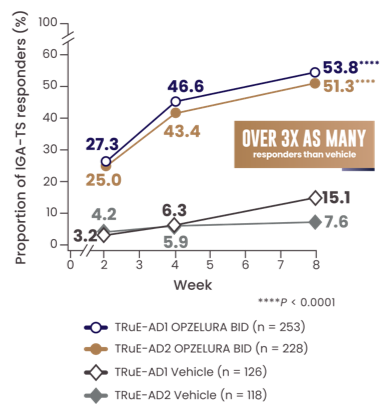
CLEAR OR ALMOST CLEAR RESULTS (IGA-TS*) AT WEEK 81-3
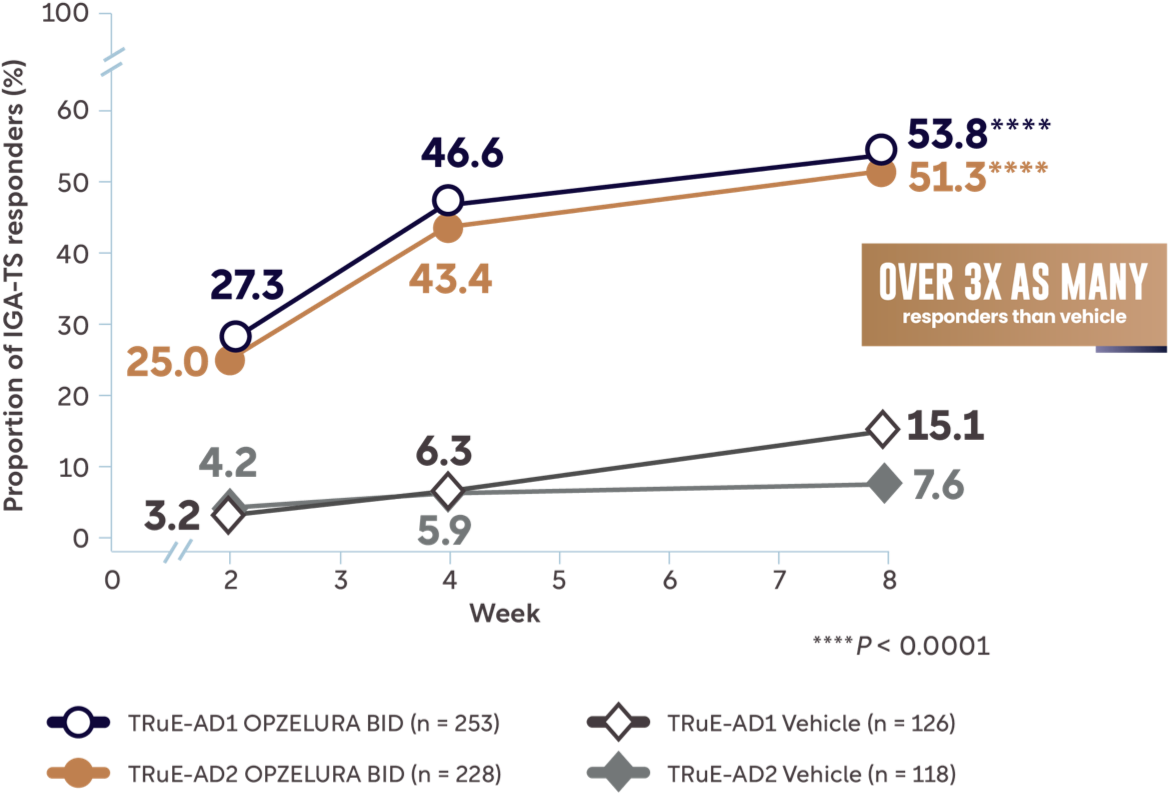
 

MORE THAN 50% OF PATIENTS ACHIEVED CLEAR OR ALMOST CLEAR SKIN WITH ≥2-POINT IMPROVEMENT (IGA-TS) FROM BASELINE AT WEEK 81-3

VIEW TRIAL OVERVIEW

*IGA-TS is defined as the achievement of clear (IGA 0) or almost clear (IGA 1) skin with at least a 2-point improvement from baseline; IGA is assessed on a severity scale of 0 to 4.1

BID, twice daily; IGA, Investigator’s Global Assessment; IGA-TS, Investigator’s Global Assessment treatment success.

Adapted from Papp K et al. doi:10.17632/ffx6nd5zyb.1. Licensed under CC BY 4.0

The line graph above shows the proportion of IGA-TS responders for OPZELURA and vehicle from the TRuE-AD1 and TRuE-AD2 clinical trials from Week 0 to Week 8. At Week 8, 53.8% of patients taking OPZELURA achieved clear or almost clear results vs. 15.1% for vehicle in TRuE-AD1. In TRuE-AD2, 51.3% of patients taking OPZELURA achieved clear or almost clear results vs. 7.6% for vehicle. This demonstrates over 3x as many responders to OPZELURA than vehicle.1-3

EASI-75 AND EASI-90 SCORES AT WEEK 82,3

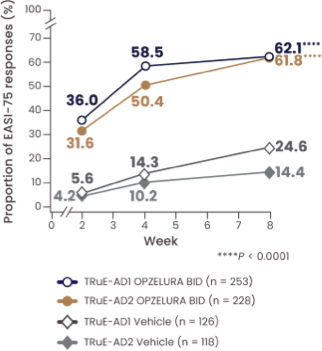
≥75% IMPROVEMENT IN LESION EXTENT AND SEVERITY (EASI-75*) AT WEEK 82,3
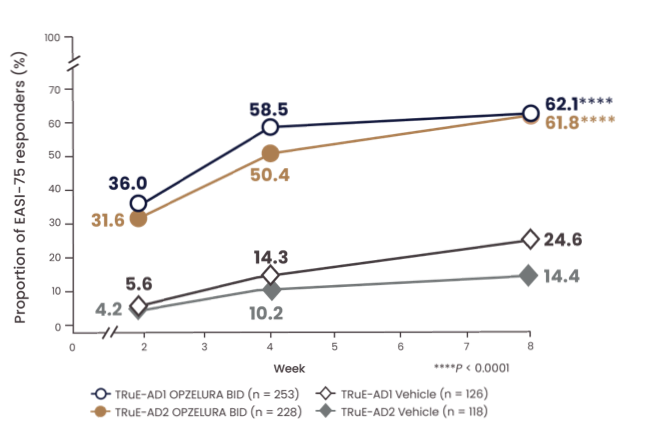
 

>60% of patients achieved EASI-75 at Week 82

In TRuE-AD1 and TRuE-AD2, respectively, 46% and 50% of patients on OPZELURA vs. 56% and 44% of patients on vehicle had a mild EASI score (defined as between 1.1 to 7.0) at baseline.4,5

VIEW TRIAL OVERVIEW

*EASI-75 is defined as the achievement of at least 75% improvement in EASI score from baseline. In TRuE-AD1/2, EASI-75 was a key secondary endpoint.2

BID, twice daily; EASI, Eczema Area and Severity Index.

Adapted from Papp K et al. doi:10.17632/ffx6nd5zyb.1. Licensed under CC BY 4.0

The line graph above shows the proportion of patients achieving EASI-75 at Week 8. In TRuE-AD1 and TRuE-AD2, respectively, 62.1% and 61.8% of patients on OPZELURA vs. 24.6% and 14.4% of patients on vehicle achieved EASI-75 at Week 8.2,3

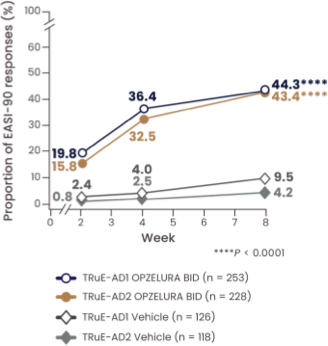
≥90% IMPROVEMENT IN LESION EXTENT AND SEVERITY (EASI-90*) AT WEEK 82,3

 

In TRuE-AD1 and TRuE-AD2, respectively, 46% and 50% of patients on OPZELURA vs. 56% and 44% of patients on vehicle had a mild EASI score (defined as between 1.1 to 7.0) at baseline.4,5

VIEW TRIAL OVERVIEW

*EASI-90 is defined as the achievement 
of at least 90% improvement in EASI score from baseline. In TRuE-AD1/2, EASI-90 was a secondary endpoint.2

BID, twice daily; EASI, Eczema Area and Severity Index.

Adapted from Papp K et al. doi:10.17632/ffx6nd5zyb.1. Licensed under CC BY 4.0

The line graph above shows the proportion of patients achieving EASI-90 at Week 8. In TRuE-AD1 and TRuE-AD2, respectively, 44.3% and 43.4% of patients on OPZELURA vs. 9.5% and 4.2% of patients on vehicle achieved EASI-90 at Week 8.2,3

WHAT ARE PATIENTS SAYING ABOUT OPZELURA?


LONG-TERM EXTENSION DATA

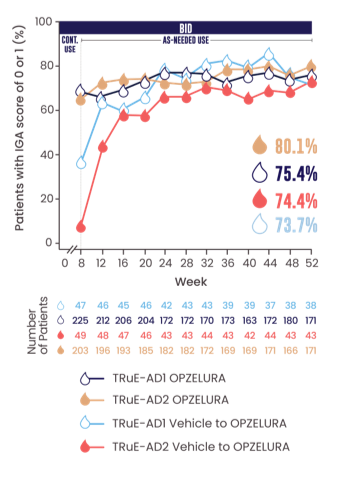
CLEAR OR ALMOST CLEAR SKIN THROUGH 52 WEEKS WITH AS-NEEDED USE OF MONOTHERAPY6

IGA* SCORES OF 0/1 THROUGH WEEK 52 (EXTENSION DATA)6

*IGA is assessed on a severity scale of 0 to 4.1

 
  • Data were reported as observed6
  • No conclusions of safety or efficacy should be made based on these results
  • OPZELURA is for short-term and non-continuous use only1

VIEW TRIAL OVERVIEW

The line graph above shows the proportion of patients with IGA scores of 0/1 with OPZELURA at Week 52. In TRuE-AD1 and TRuE-AD2, respectively, 75.4% and 80.1% of patients on OPZELURA vs. 73.7% and 74.4% of patients on vehicle had clear or almost clear skin after switching from vehicle to OPZELURA and using it as needed in the 44-week extension period. Please note that the number of patients in the extension part of each trial decreased over time.6

BID, twice daily; IGA, Investigator's Global Assessment.

BID, twice daily; IGA, Investigator's Global Assessment.
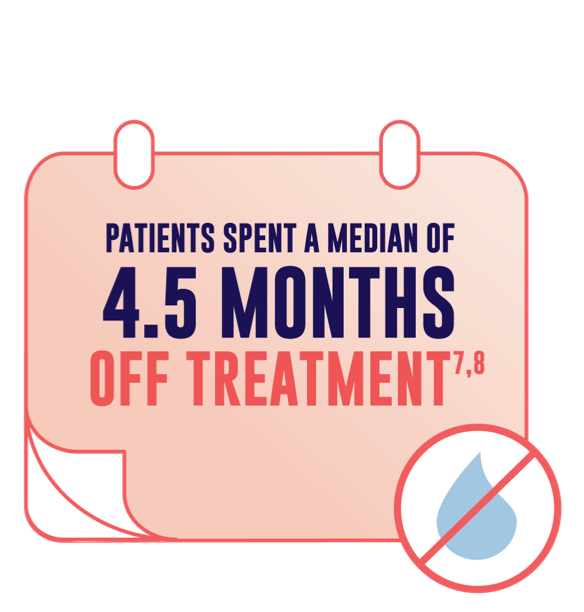
Patients spent 44% of the 44-Week LTS periods between Weeks 8 and 52 off treatment due to lesion clearance.7,8

Data were reported as observed.6,7

No conclusions of safety or efficacy should be made based on these results.

 

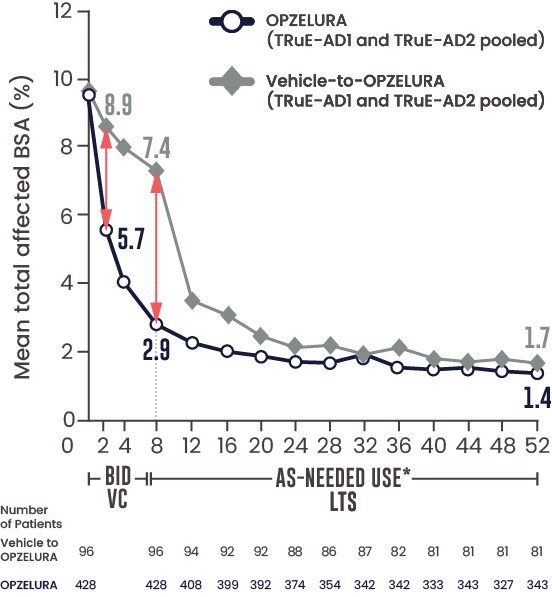
AFFECTED BSA THROUGH 1 YEAR4,8
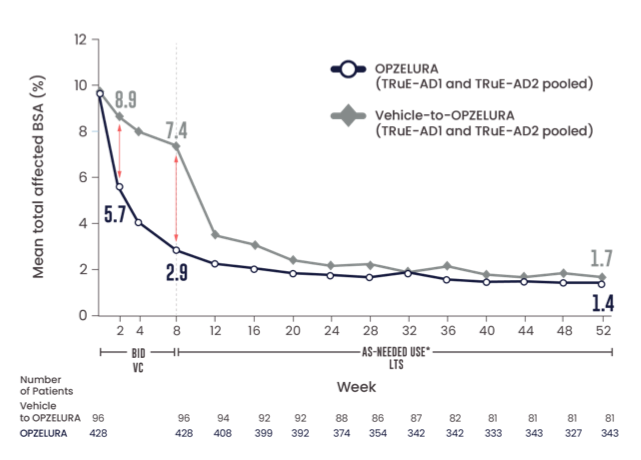
Adapted from Papp et al. J Am Acad Dermatol. 2022.

LTS data were reported as observed. No conclusions of safety or efficacy should be made based on these results.

OPZELURA is for short-term and non-continuous use only.1

*Among patients who continued into the LTS period.

Mean affected BSA in the OPZELURA group at baseline and Week 8 was 9.3% and 2.8%, respectively, for TRuE-AD1 and 9.5% and 3.0%, respectively, for TRuE-AD2.4

The graph above shows the pooled data from TRuE-AD1 and TRuE-AD2 for mean total affected BSA over 52 weeks. At Week 52, patients using OPZELURA had a mean total affected BSA of 1.4% vs. 1.7% for those who switched from vehicle to OPZELURA at Week 8. Please note that the number of patients in the extension part of each trial decreased over time.8

AD, atopic dermatitis; BID, twice daily; BSA, body surface area; LTS, long-term safety; VC, vehicle-controlled.

SELECT ENDPOINT TO SEE VISUALIZATION

LTS data were reported as observed.4,8

No conclusions of safety or efficacy should be made based on these results.

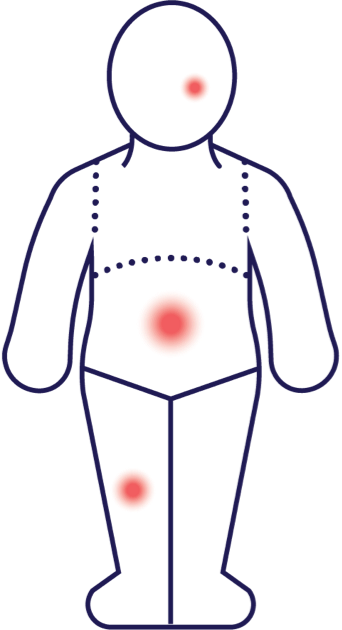
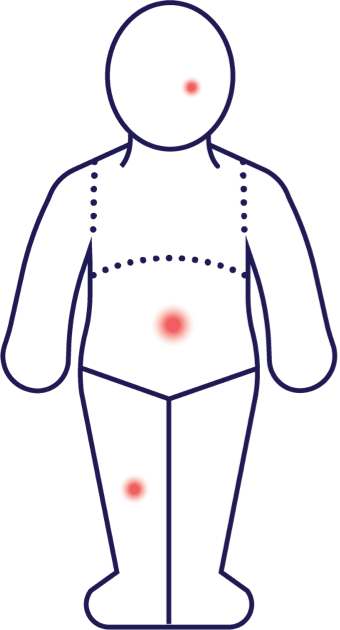
This figure is intended to illustrate the mean affected BSA reduction in the OPZELURA arm (pooled LTS data from TRuE-AD1 and TRuE-AD2) using hypothetical lesions, not necessarily depicting actual results. However, the size of the lesions has been mathematically calculated to ensure accuracy relative to each body region. Results may vary.4,8

For topical use only. Not for ophthalmic, oral, or intravaginal use. Instruct patients to apply a thin layer of OPZELURA twice daily to affected areas of up to 20% BSA. Patients should stop using when signs and symptoms of AD resolve. If signs and symptoms do not improve within 8 weeks, patients should be re-examined by their HCP.1

Mean affected BSA in the OPZELURA group at baseline and Week 8 was 9.3% and 2.8%, respectively, for TRuE-AD1 and 9.5% and 3.0%, respectively, for TRuE-AD2.4

The visualization above shows the pooled data from TRuE-AD1 and TRuE-AD2 for mean total affected BSA over 52 weeks. At Week 52, patients using OPZELURA had a mean total affected BSA of 1.4% vs. 1.7% for those who switched from vehicle to OPZELURA at Week 8. Please note that the number of patients in the extension part of each trial decreased over time.8

AD, atopic dermatitis; BID, twice daily; BSA, body surface area; LTS, long-term safety; VC, vehicle-controlled.

PHASE 2 DOSE-RANGING STUDY

OPZELURA, TRIAMCINOLONE CREAM 0.1%, AND VEHICLE9,10

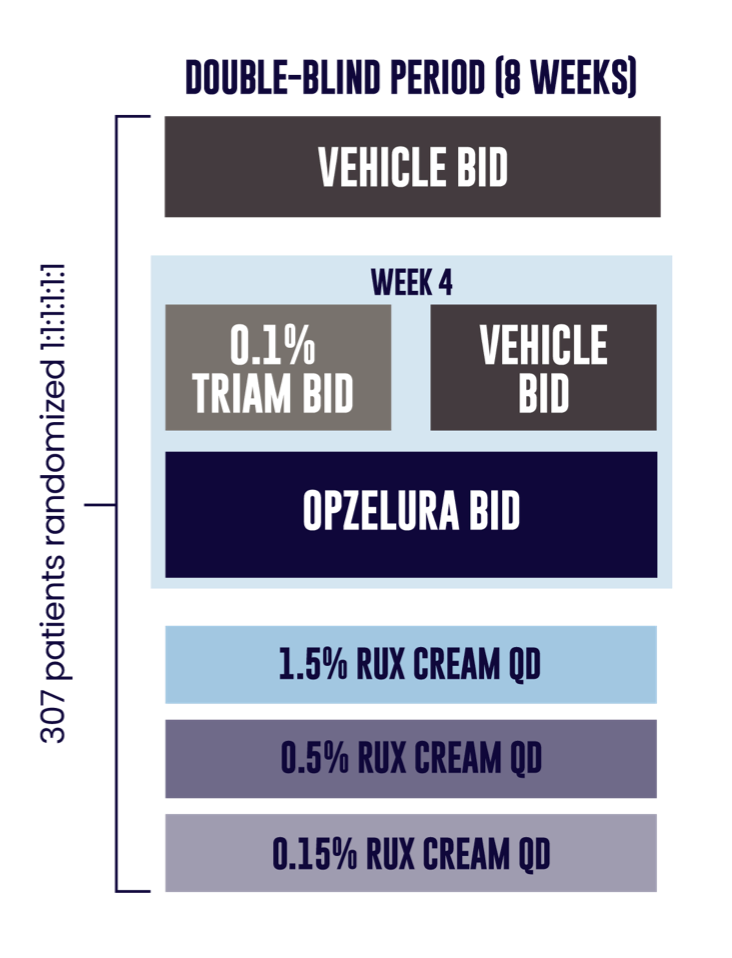
PHASE 2, RANDOMIZED, DOUBLE-BLIND, DOSE-RANGING, VEHICLE- AND ACTIVE-CONTROLLED STUDY IN ADULT PATIENTS WITH AD9,10
 

PRIMARY ENDPOINT RESULTS:

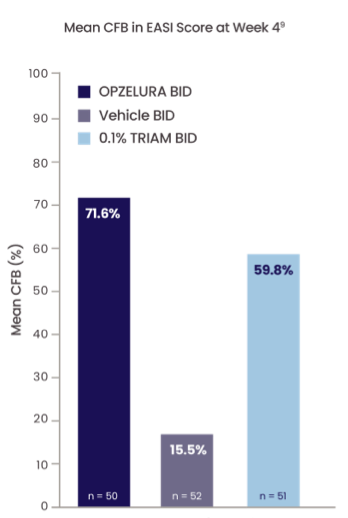
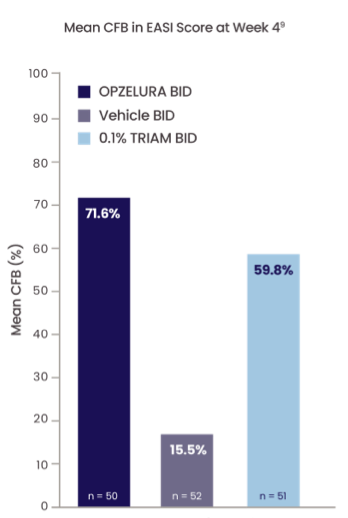
MEAN CFB IN EASI SCORE AT WEEK 4 (OPZELURA: 71.6%, vehicle: 15.5%; P < 0.0001).9

No statistical comparison between triamcinolone and OPZELURA is shown.9,10

Enrollment criteria: aged 18-70, history of AD for ≥2 years, IGA score of 2 or 3, affected BSA of 3% to 20%.9

Following the 8-week, double-blind period, patients in all treatment arms were treated with OPZELURA BID for an additional 4 weeks (open-label period), followed by a 4-week follow-up period.9,10

Treatment of facial dermatitis was not permitted because of the restrictions on the use of triamcinolone on the face.9

The graphic above shows the study design for the phase 2, randomized, double-blind, dose-ranging, vehicle- and active-controlled study in adult patients with AD. 307 patients were randomized evenly for 8 weeks of double-blind treatment: vehicle, triamcinolone cream (0.1% BID for 4 weeks, then vehicle for 4 weeks), OPZELURA BID, ruxolitinib cream 1.5% QD, ruxolitinib cream 0.5% QD, or ruxolitinib cream 0.15% QD.9

SELECT ENDPOINTS
Descriptive analysis; no statistical comparison between triamcinolone and OPZELURA is shown.9,10

No conclusions of efficacy and safety should be made based on these results.

The bar graph above shows the mean change from baseline in EASI score from a phase 2 dose-ranging study. At Week 4, patients using OPZELURA had a 71.6% change from baseline EASI score vs. 59.8% and 15.5% for those using triamcinolone and vehicle, respectively.9

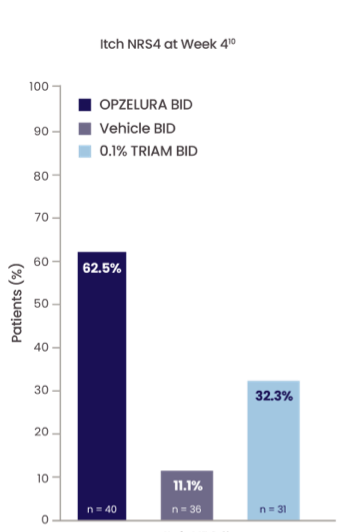
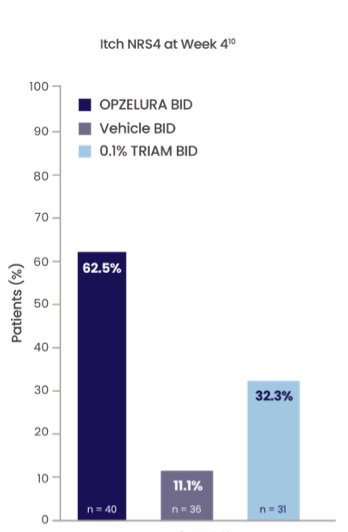
The bar graph above shows the proportion of patients with a 4-point or higher reduction in itch NRS score at Week 4 (Itch NRS-4) in a phase 2, dose-ranging study. At Week 4, itch NRS4 rates for patients using OPZELURA were 62.5% vs. 32.3% and 11.1% for patients using triamcinolone and vehicle, respectively.10

In the 8-week double-blind period, TEAEs were reported in 24% (n = 12) of OPZELURA BID patients and 33.3% (n = 17), of TRIAM BID patients; no serious TEAEs related to the study drug occurred. Most common TEAEs occurring in >1% of patient population were nasopharyngitis (OPZELURA BID 4%, TRIAM BID 0%), AD (0%, 3.9%), upper respiratory tract infection (2%, 2%), application site pain (2%, 0%), headache (4%, 0%), and urinary tract infection (0%, 2%).9

*Mean CFB in EASI is defined as mean percent change in lesion extent and severity from baseline at Week 4; patients in the analysis had an EASI score of 8.4 ± 4.7 at baseline.9
Itch NRS4 is defined as the achievement of at least a 4-point improvement in daily itch on a 0- to 10-point scale, considered a clinically meaningful response. Patients in the analysis had an NRS score ≥4 at baseline; mean NRS score at baseline was 5.1,2

AD, atopic dermatitis; BID, twice daily; BSA, body surface area; CFB, change from baseline; EASI, Eczema Area and Severity Index; IGA, Investigator’s Global Assessment; NRS, numerical rating scale; QD, once daily; TEAE, treatment-emergent adverse event; TRIAM, triamcinolone.


WHAT ARE PATIENTS SAYING ABOUT OPZELURA?

Important Safety Information and indication


INDICATION

OPZELURA is indicated for the topical short-term and non-continuous chronic treatment of mild to moderate atopic dermatitis in non-immunocompromised adult and pediatric patients 2 years of age and older whose disease is not adequately controlled with topical prescription therapies or when those therapies are not advisable.

Limitations of Use: Use of OPZELURA in combination with therapeutic biologics, other JAK inhibitors, or potent immunosuppressants such as azathioprine or cyclosporine is not recommended.

IMPORTANT SAFETY INFORMATION

SERIOUS INFECTIONS
Patients treated with oral Janus kinase (JAK) inhibitors for inflammatory conditions are at risk for developing serious infections that may lead to hospitalization or death. Reported infections include:
  • Active tuberculosis, which may present with pulmonary or extrapulmonary disease.
  • Invasive fungal infections, including cryptococcosis and pneumocystosis.
  • Bacterial, viral, including herpes zoster, and other infections due to opportunistic pathogens.
Avoid use of OPZELURA in patients with an active, serious infection, including localized infections. If a serious infection develops, interrupt OPZELURA until the infection is controlled. Carefully consider the benefits and risks of treatment prior to initiating OPZELURA in patients with chronic or recurrent infection. Closely monitor patients for the development of signs and symptoms of infection during and after treatment with OPZELURA.

Serious lower respiratory tract infections were reported in the clinical development program with topical ruxolitinib.

No cases of active tuberculosis (TB) were reported in clinical trials with OPZELURA. Cases of active TB were reported in clinical trials of oral JAK inhibitors used to treat inflammatory conditions. Consider evaluating patients for latent and active TB infection prior to administration of OPZELURA. During OPZELURA use, monitor patients for the development of signs and symptoms of TB.

Viral reactivation, including cases of herpes virus reactivation (e.g., herpes zoster), were reported in clinical trials with JAK inhibitors used to treat inflammatory conditions including OPZELURA. If a patient develops herpes zoster, consider interrupting OPZELURA treatment until the episode resolves.

Hepatitis B viral load (HBV-DNA titer) increases, with or without associated elevations in alanine aminotransferase and aspartate aminotransferase, have been reported in patients with chronic HBV infections taking oral ruxolitinib. OPZELURA initiation is not recommended in patients with active hepatitis B or hepatitis C.

MORTALITY

In a large, randomized, postmarketing safety study in rheumatoid arthritis (RA) patients 50 years of age and older with at least one cardiovascular risk factor comparing an oral JAK inhibitor to tumor necrosis factor (TNF) blocker treatment, a higher rate of all-cause mortality, including sudden cardiovascular death, was observed with the JAK inhibitor. Consider the benefits and risks for the individual patient prior to initiating or continuing therapy with OPZELURA.

MALIGNANCIES

Malignancies were reported in patients treated with OPZELURA. Lymphoma and other malignancies have been observed in patients receiving JAK inhibitors used to treat inflammatory conditions. In RA patients treated with an oral JAK inhibitor, a higher rate of malignancies (excluding non-melanoma skin cancer (NMSC)) was observed when compared with TNF blockers. Patients who are current or past smokers are at additional increased risk.

Consider the benefits and risks for the individual patient prior to initiating or continuing therapy with OPZELURA, particularly in patients with a known malignancy (other than successfully treated non-melanoma skin cancers), patients who develop a malignancy when on treatment, and patients who are current or past smokers.

Non-melanoma skin cancers, including basal cell and squamous cell carcinoma, have occurred in patients treated with OPZELURA. Perform periodic skin examinations during OPZELURA treatment and following treatment as appropriate. Exposure to sunlight and UV light should be limited by wearing protective clothing and using broad-spectrum sunscreen.

MAJOR ADVERSE CARDIOVASCULAR EVENTS (MACE)

In RA patients 50 years of age and older with at least one cardiovascular risk factor treated with an oral JAK inhibitor, a higher rate of major adverse cardiovascular events (MACE) (defined as cardiovascular death, myocardial infarction, and stroke), was observed when compared with TNF blockers. Patients who are current or past smokers are at additional increased risk. Discontinue OPZELURA in patients who have experienced a myocardial infarction or stroke.

Consider the benefits and risks for the individual patient prior to initiating or continuing therapy with OPZELURA, particularly in patients who are current or past smokers and patients with other cardiovascular risk factors. Patients should be informed about the symptoms of serious cardiovascular events and the steps to take if they occur. Discontinue OPZELURA in patients that have experienced a myocardial infarction or stroke.

THROMBOSIS

Thromboembolic events were observed in trials with OPZELURA. Thrombosis, including pulmonary embolism (PE), deep venous thrombosis (DVT), and arterial thrombosis have been reported in patients receiving JAK inhibitors used to treat inflammatory conditions. Many of these adverse reactions were serious and some resulted in death. In RA patients 50 years of age and older with at least one cardiovascular risk factor treated with an oral JAK inhibitor, a higher rate of thrombosis was observed when compared with TNF blockers. Avoid OPZELURA in patients at risk. If symptoms of thrombosis occur, discontinue OPZELURA and treat appropriately.

CYTOPENIAS

Thrombocytopenia, anemia, neutropenia, lymphopenia, and leukopenia were reported in the clinical trials with OPZELURA. Consider the benefits and risks for individual patients who have a known history of these events prior to initiating therapy with OPZELURA. Perform CBC monitoring as clinically indicated. Discontinue OPZELURA if signs and/or symptoms associated with clinically significant decreases in laboratory values occur.

Lipid Elevations

Treatment with oral ruxolitinib has been associated with increases in lipid parameters including total cholesterol, low-density lipoprotein (LDL) cholesterol, and triglycerides.

Adverse Reactions

In atopic dermatitis, the most common adverse reactions (≥1%) are nasopharyngitis, bronchitis, ear infection, eosinophil count increased, urticaria, diarrhea, folliculitis, tonsillitis, rhinorrhea, upper respiratory tract infection, COVID-19, application site reaction, pyrexia, and white blood cell decreased.

Pregnancy Registry

There is a pregnancy registry that monitors pregnancy outcomes in pregnant persons exposed to OPZELURA during pregnancy. Pregnant persons exposed to OPZELURA and healthcare providers should report OPZELURA exposure by calling 1-855-463-3463 or visiting www.opzelura.pregnancy.incyte.com.

Lactation

Advise women not to breastfeed during treatment with OPZELURA and for approximately four weeks after the last dose (approximately 5-6 elimination half-lives).

Please see Full Prescribing Information, including Boxed Warning, and Medication Guide for OPZELURA.

Indication

OPZELURA is indicated for the topical short-term and non-continuous chronic treatment of mild to moderate atopic

Important Safety Information

Important Safety Information and indication

Serious Infections

Patients treated with oral Janus kinase (JAK) inhibitors for inflammatory conditions are at risk for developing serious infections that may lead to hospitalization or death. Reported infections include:

Patients treated with oral Janus kinase (JAK) inhibitors for inflammatory conditions are at risk for developing serious infections that may lead to hospitalization or death. Reported infections include:

REFERENCES: 1. OPZELURA Prescribing Information. Wilmington, DE: Incyte Corporation. 2. Papp K, Szepietowski JC, Kircik L, et al. Efficacy and safety of ruxolitinib cream for the treatment of atopic dermatitis: results from 2 phase 3, randomized, double-blind studies. J Am Acad Dermatol. 2021;85(4):863-872. doi:10.1016/j.jaad.2021.04.085 3. Papp K, Szepietowski JC, Kircik L, et al. Efficacy and safety of ruxolitinib cream for the treatment of atopic dermatitis: results from 2 phase 3, randomized, double-blind studies. J Am Acad Dermatol. 2021;85(suppl):863-872. doi:10.1016/j.jaad.2021.04.085 
4. Data on File. Incyte Corporation. 5. Leshem YA, Hajar T, Hanifin JM, Simpson EL. What the Eczema Area and Severity Index score tells us about the severity of atopic dermatitis: an interpretability study. Br J Dermatol. 2015;172(5):1353-1357. doi:10.1111/bjd.13662 6. Papp K, Szepietowski JC, Kircik L, et al. Long-term safety and disease control with ruxolitinib cream in atopic dermatitis: results from two phase 3 studies. Presented at the Revolutionizing Atopic Dermatitis Virtual Conference; June 13, 2021. 7. Blauvelt A, Kircik L, Simpson EL, et al. Ruxolitinib cream demonstrates maintenance of disease and symptom control with as-needed use in adults and adolescents with atopic dermatitis: pooled analysis from the long-term safety periods of two phase 3 studies. Presented at the American Academy of Dermatology Annual Meeting; March 17–21, 2023; New Orleans, LA. 8. Papp K, Szepietowski JC, Kircik L, et al. Long-term safety and disease control with ruxolitinib cream in atopic dermatitis: Results from two phase 3 studies. J Am Acad Dermatol. 2022;88(5):1008-1016. doi:10.1016/j.jaad.2022.09.060 9. Kim BS, Howell MD, Sun K, Papp K, Nasir A, Kuligowski ME. Treatment of atopic dermatitis with ruxolitinib cream (JAK1/JAK2 inhibitor) or triamcinolone cream. J Allergy Clin Immunol. 2019;145(2):572-582. doi:10.1016/j.jaci.2019.08.042 10. Kim BS, Sun K, Papp K, et al. Effects of ruxolitinib cream on pruritus and quality of life in atopic dermatitis: results from a phase 2, randomized, dose-ranging, vehicle- and active-controlled study. J Am Acad Dermatol. 2020;82(6):1305-1313. doi:10.1016/j.jaad.2020.02.009